
Meet the FABLE Brazil team
The team is led by Instituto Dom Luiz, with contributions from the Graduate School of Engineering (COPPE) at the Federal University of Rio de Janeiro.
Instituto Dom Luiz (IDL) is an Associated Laboratory based at the Faculty of Sciences of the University of Lisbon (FCUL). IDL focuses on fundamental Earth System research, as well as applications and technologies that relate science with today's societal concerns: forecasting and adapting to climate change and to other major natural hazards, and establishing an environmentally sustainable supply of raw materials, water and energy.
Under COPPE, the Energy Planning Program (PPE) oversees the Center for Energy and Environmental Economics (Cenergia), a prominent think-tank for Latin America and global issues, focused on energy, economy, and environmental sustainability. It conducts applied research on energy's impact on socio-economic development and the environment, using advanced modeling tools for low-carbon transition insights.
The FABLE Brazil team’s main areas of interest are in land-use modelling, sustainable development, climate change impacts, and forest restoration.

Alexandre C. Köberle
Instituto Dom Luiz

Wanderson Costa
Instituto Dom Luiz

Sara Juliana Gálvez Gutiérrez
Instituto Dom Luiz
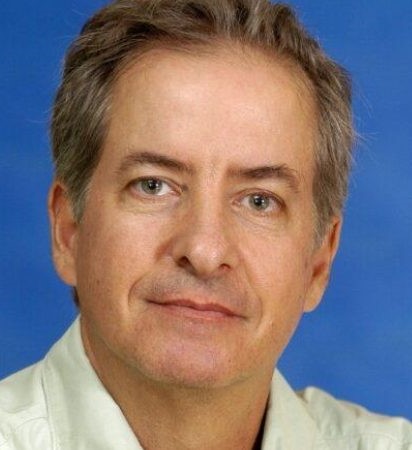
Roberto Schaeffer
Cenergia Lab – COPPE/UFRJ
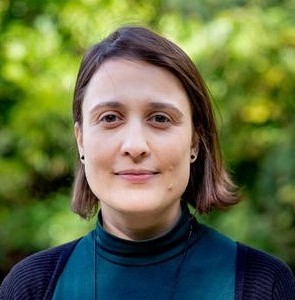
Aline Soterroni
Oxford University

Joana Portugal Pereira
Cenergia Lab – COPPE/UFRJ; University of Lisbon

Ana Carolina Fiorini
Cenergia Lab – COPPE/UFRJ

Fabio Diuana
Cenergia Lab – COPPE/UFRJ

Gerd Angelkorte
Cenergia Lab – COPPE/UFRJ
Former members: Marluce Scarabello and Fernando Ramos.
Transforming food and land-use systems in Brazil
Brazil has one of the largest economies in the world, along with a land area and population that ranks fifth and sixth globally. Its diverse geography and topography make it home to some of the greatest biodiversity on the planet, notably in the Amazon basin, the Atlantic forest, and the Cerrado.
Activities resulting from the food production system, particularly cattle ranching and overfishing, are major drivers of biodiversity loss. Brazil's global position as one of the largest producers and exporters of beef has resulted in massive deforestation in the Amazon. Soybean production, which is on the rise, also poses a significant risk to natural habitats such as the Cerrado biome.
Deforestation, water pollution, forest fires, and invasive species are among the main threats to biodiversity, with 1,249 species in Brazil alone considered to be endangered. Destructive activities such as logging and illegal mining further compound these threats. These adverse effects on nature are exacerbated by the transportation and energy infrastructure, such as roads, railways, and hydroelectric reservoirs. All these challenges combined with climate change can have a significant impact on the progress in Brazil's agriculture and food security goals.
Key national objectives and targets
In the latest Brazil’s Nationally Determined Contribution (NDC) to the UNFCCC, the country committed to reducing its greenhouse gas (GHG) emissions by 37% below 2005 levels in 2025, and by 50% below 2005 levels in 2030. Additionally, Brazil’s commitments include a long-term objective to achieve climate neutrality by 2050.
The Brazilian government pledged to reforest 12 million hectares by 2030 under the Bonn Challenge commitment and Brazil’s NDC.
Nearly 200 countries, including Brazil, sealed a deal to halt and reverse biodiversity loss by 2030 at the 15th UN Biodiversity Conference (COP15) in Montreal. Among the four goals and 23 action-oriented targets, the countries pledged to protect at least 30% of terrestrial, inland water, coastal and marine areas by 2030, while also recognizing Indigenous and traditional territories.
Brazil also committed to reducing at least 30% of its anthropogenic methane emissions by 2030 under the Global Methane Pledge.
Publications & Activities
- Portugal-Pereira, J., Soterroni, A., Mazzone, A., and Tristan, J. (2025). Assessing potential implications of the EU's carbon dioxide removal strategy on Brazil's land ecosystems and local communities, Environmental Science & Policy, Volume 171, 2025, 104154, ISSN 1462-9011, https://doi.org/10.1016/j.envsci.2025.104154.
- Köberle, A.C. Food security in climate mitigation scenarios. Nature Food 3, 98–99 (2022). https://doi.org/10.1038/s43016-021-00443-1.
- Ana Carolina Oliveira Fiorini, Pedro Rua Rodriguez Rochedo, Gerd Angelkorte, Fabio A. Diuana, Mariana Império, Lucas Silva Carvalho, Taísa Nogueira Morais, Eveline Vasquez-Arroyo & Roberto Schaeffer (2023) Investigating biodiversity trends in different mitigation scenarios with a national integrated assessment model, Journal of Integrative Environmental Sciences, 20:1, DOI: 10.1080/1943815X.2023.2239323.
- Marianne Zanon-Zotin, Clarissa Bergman-Fonte, Taísa Nogueira Morais, Pedro Luiz Barbosa Maia, Lucas Carvalho, Gerd Angelkorte, Ana Carolina Oliveira Fiorini, Pedro Rua Rodriguez Rochedo, Joana Portugal-Pereira, Alexandre Szklo, Roberto Schaeffer, Unpacking bio-based alternatives to ethylene production in Brazil, Europe, and the United States: A comparative life cycle assessment, Journal of Cleaner Production, Volume 428, 2023, 139376, ISSN 0959-6526, https://doi.org/10.1016/j.jclepro.2023.139376. .
- Oliveira Fiorini, Ana Carolina & Angelkorte, Gerd & Maia, Pedro & Bergman-Fonte, Clarissa & Vicente, Clarissa & Morais, Taísa & Carvalho, Lucas & Zanon Zotin, Marianne & Szklo, Alexandre & Schaeffer, Roberto & Portugal Pereira, Joana. (2023). Sustainable aviation fuels must control induced land use change: an integrated assessment modelling exercise for Brazil. Environmental Research Letters. 18. 10.1088/1748-9326/acaee1.
- Soterroni, Aline & Império, Mariana & Scarabello, Marluce & Seddon, Nathalie & Obersteiner, Michael & Rochedo, Pedro & Schaeffer, Roberto & Andrade, Pedro & Ramos, Fernando & Azevedo, Tasso & Ometto, Jean & Havlík, Petr & Alencar, Ane. (2023). Nature‐based solutions are critical for putting Brazil on track towards net‐zero emissions by 2050. Global Change Biology. 29. 10.1111/gcb.16984.
- Intergovernmental Panel on Climate Change (IPCC), ed. Emissions Trends and Drivers. In: Climate Change 2022 - Mitigation of Climate Change: Working Group III Contribution to the Sixth Assessment Report of the Intergovernmental Panel on Climate Change. Cambridge: Cambridge University Press; 2023:215-294. doi:10.1017/9781009157926.004.
- Intergovernmental Panel on Climate Change (IPCC), ed. Mitigation Pathways Compatible with Long-term Goals. In: Climate Change 2022 - Mitigation of Climate Change: Working Group III Contribution to the Sixth Assessment Report of the Intergovernmental Panel on Climate Change. Cambridge: Cambridge University Press; 2023:295-408. doi:10.1017/9781009157926.005.
- IPCC, 2022: Summary for Policymakers [P.R. Shukla, J. Skea, A. Reisinger, R. Slade, R. Fradera, M. Pathak, A. Al Khourdajie, M. Belkacemi, R. van Diemen, A. Hasija, G. Lisboa, S. Luz, J. Malley, D. McCollum, S. Some, P. Vyas, (eds.)]. In: Climate Change 2022: Mitigation of Climate Change. Contribution of Working Group III to the Sixth Assessment Report of the Intergovernmental Panel on Climate Change [P.R. Shukla, J. Skea, R. Slade, A. Al Khourdajie, R. van Diemen, D. McCollum, M. Pathak, S. Some, P. Vyas, R. Fradera, M. Belkacemi, A. Hasija, G. Lisboa, S. Luz, J. Malley, (eds.)]. Cambridge University Press, Cambridge, UK and New York, NY, USA. doi: 10.1017/9781009157926.001.
- M. Pathak, R. Slade, P.R. Shukla, J. Skea, R. Pichs-Madruga, D. Ürge-Vorsatz,2022: Technical Summary. In: Climate Change 2022: Mitigation of Climate Change. Contribution of Working Group III to the Sixth Assessment Report of the Intergovernmental Panel on Climate Change [P.R. Shukla, J. Skea, R. Slade, A. Al Khourdajie, R. van Diemen, D. McCollum, M. Pathak, S. Some, P. Vyas, R. Fradera, M. Belkacemi, A. Hasija, G. Lisboa, S. Luz, J. Malley, (eds.)]. Cambridge University Press, Cambridge, UK and New York, NY, USA. doi: 10.1017/9781009157926.002.
- Nobre, C.A. et al. (2023) Nova Economia da Amazônia. São Paulo: WRI Brasil. Relatório. Disponível online em: www.wribrasil.org. br/nova-economia-da-amazonia https://doi.org/10.46830/wrirpt.22.00034.
- Blog. Brazil President Lula's first actions to protect the environment and indigenous communities.
- Camara, G.; Simoes, R.; Ruivo, H.; Andrade, P.; Soterroni, A.; Ramos, F.; Ramos, R.; Scarabello, M.; Almeida, C.; Sanches, I.; Maurano, L.; Coutinho, A.; Esquerdo, J.; Antunes, J.; Venturieri, A.; Adami, M. Forest restoration challenges in Brazilian Amazonia. Preprints.org 2023, 2023030365. https://doi.org/10.20944/preprints202303.0365.v1.
- Soterroni, A.; Império, M.; Scarabello, M.; Seddon, N.; Obersteiner, M.; Rochedo, P.; Schaeffer, R.; Andrade, P.; Ramos, F.; Azevedo, T.; Ometto, J.; Havlik, P.; Alencar, A. Nature-Based Solutions Are Critical for Putting Brazil on Track Towards Net Zero. Preprints.org 2022, 2022110054. https://doi.org/10.20944/preprints202211.0054.v1.
- FABLE (2020). Pathways to Sustainable Land-Use and Food Systems. 2020 Report of the FABLE Consortium. International Institute for Applied Systems Analysis (IIASA) and Sustainable Development Solutions Network (SDSN), Laxenburg and Paris. 10.22022/ESM/12-2020.16896.. Brazil chapter.
- FABLE (2019). Pathways to Sustainable Land-Use and Food Systems. 2019 Report of the FABLE Consortium. Laxenburg and Paris: International Institute for Applied Systems Analysis (IIASA) and Sustainable Development Solutions Network (SDSN). Pathway for Brazil.